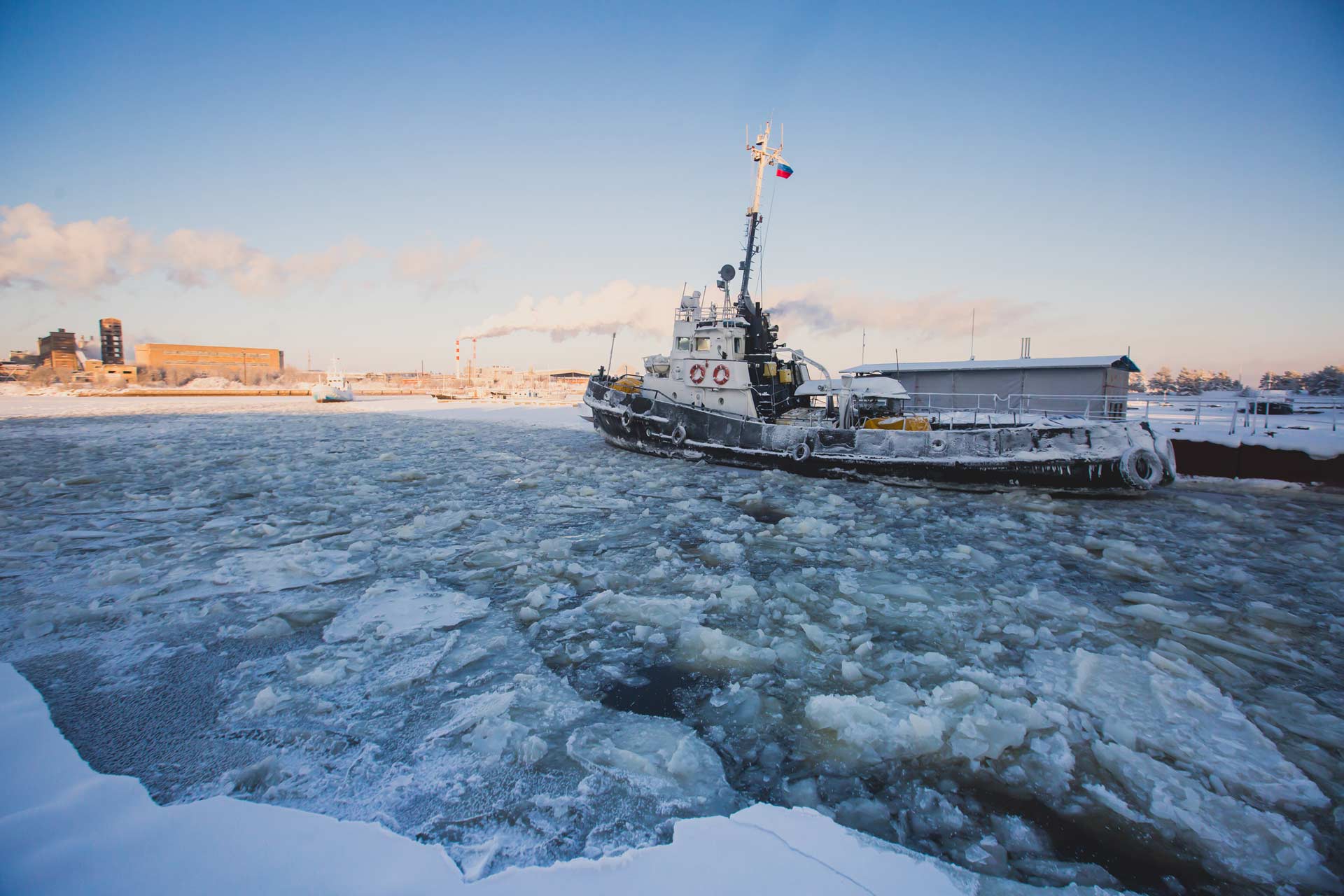
The challenge of ice and how ships cope
Icebreakers are impressive vessels that are specifically designed to be able to withstand the demands of a frozen ocean – and tend to at the forefront of our minds when thinking about shipping and extreme cold. But that is only part of the story. The formation of ice on and around ships also poses challenges, some of which can be devastating.
As we’ve discovered when examining other industries, extreme cold affects everything it comes into contact with, and ships are no exception. Whether small fishing vessels or large tankers, ice accretion can cause havoc, from instrument freeze – including radar / randomes – to the very stability of the vessel. As an example in 2002 two fishing vessels capsized as a result of icing (in the Black Sea of all places), and there are regular examples of severe icing on bigger vessels.
In general terms there are three types of icing issue at sea:
- Freezing rain / drizzle that cause a thin layer of ice across large areas such as rigging, decks, masts; this is the most common form of marine-related icing and is generally not dangerous (unless you slip on it of course!) However there have been extreme instances recorded (usually by polar research vessels) that have caused outages of critical communication equipment.
- When the air temperature is at least 9 degrees Celsius less than that of the water, freezing fog is likely to form, adhering itself to surfaces as ice (although this is rare and almost always close to land or a docked vessel).
- Out at sea if the air temperature is particularly low and storm conditions are present, ‘ice spray’ can form as the wind picks up surrounding water, freezing it as it hits the vessel. This type of ice accretion is particularly dangerous as it normally occurs at the same time as freezing rain, doubling up the icing issue and accelerating ice build up at twice the normal speed.
Geographic location also plays a part in the type of ice accumulation. In the Northern Hemisphere ice spray is almost twice as likely to occur as the South, whereas freezing rain / drizzle and the combination of ice spray with rain has a higher occurrence South of the equator. A 2015 study on the subject* took over four thousand observations of icing in the North Atlantic and discovered that it doesn’t need to be particularly cold for ice to build up. There were many instances of ice accretion measuring between 7cm-14cm in depth over a 24 hour period in air temperatures of only -6 Celsius.
Instrumentation failure is of course a critical issue here, but with smaller vessels (such as the Black Sea fishing boats) the additional weight that ice brings can have potentially catastrophic consequences. Dependent on factors such as wind direction, water and air temperature differentials, ice can build up on one side of a vessel, or high above the deck level, creating huge instability and the increased risk of capsizing.
In all of the above cases, ships usually have minimal protection from the effects of severe icing, which begs the question why? The answer is twofold; firstly the phenomenon is relatively rare; and secondly there are a dearth of solutions to alleviate the issue. One potential answer may lay in new approaches to protective coatings. Over the last few years big strides have been taken in the development of coatings that demonstrate particular behaviours. The use of nanotechnology and specifically nanoparticles in these coatings have unlocked characteristics that allow for durability and – in the case of ice accretion – anti-icing properties. For the marine sector the use of a passive, permanent durable anti-icing coating would appear to be the right way to go. Applying such a coating to the most vulnerable areas of a ship (open decking, masts, telecoms equipment & related) would mitigate against icing issues in particularly cold conditions, creating a far safer environment for crews and freight alike.
The ICELIP project (commercial name Icemart®) – led by a consortium** of British-based organisations and funded by Innovate UK – is focused on the development and commercialisation of a new, passive ice-repellent coating that prevents ice formation and adhesion without the need for active ice-management. It incorporates functionalised nano particles into an aviation-certified film forming matrix and could provide shipping organisations with an answer to the challenges posed by ice build-up.
*Safety of Ships in Icing Conditions, Lech Kobylinski, 2015
** TWI Ltd, CAV Systems, LSBU, Innvotek, BAE Systems, Promethean Particles, Opus Materials Technologies